')">
In the small car market there are only a few cars which are automatics and plus very few which are actually affordable. Out of the two, it is the Hyundai I10 automatic and the Maruti A-Star automatic. Out of the spectrum, we have the Hyundai I20 automatic. The I20 is clearly in the big sedan price range and hence I would refrain from bringing it into this topic. Rumors are floating around that the Volkswagen Polo as also the Skoda Fabia would also carry automatic boxes soon. Well, that is a distant thing and lets concentrate more on the job that we have on hand now and that is getting the A-Star and the I10 pitted against each other. While the Hyundai I10’s manual variant boasts of having better sales figures than the A-Star, the auto variant of the A-Star is a huge hit amongst females and singles. Automatic convenience is what is the need of the hour. Both the cars were traditional rivals from the time they were launched and also now their automatic variants are slogging it out amongst themselves. So, it’s the Hyundai I10 automatic in India compared to the Maruti A-Star automatic in India.
Looks
Hyundai I10 automatic : The Hyundai I10 automatic in India has recently got revised looks and much in line with the “Fluidic Concept” design language which is now being spoken in the Korean’s headquarters. The face now features a hexagon with those swooping head lamps and very Audish grille. The fog lamp inserts have been borrowed from the Chevy Beat while the design of the lower bumper has been nicely inculcated into the overall theme. The outside rear view mirrors now feature turn indicators on them. The wheel cap design also has been changed from the previous model. The rear design hasn’t changed much and is more in theme with the old car. The tail lamps feature clear lens glasses and as also reflectors on the lower bumper. Oh well, there is an automatic badge as well.

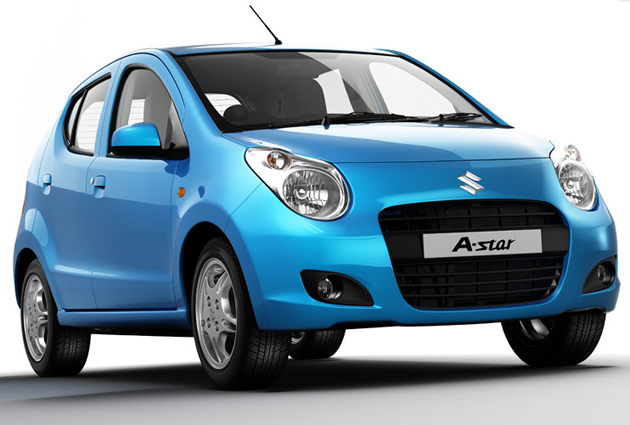
Maruti A-Star automatic : The Maruti A-Star automatic has that pop out head lamps which are somewhat similar to the ones in the Ritz. Due to the tall boy design of these cars, it is almost difficult to distinguish between these cars from a distance. Only that the color schemes for the Ritz and A-Star are a bit different. The wide grille of the A-Star isn’t that prominently bisected as that in the I10. The A-Star auto is fully kitted with fog lamps and alloy wheels. Unlike other Marutis, the tyres of this car don’t look as puny. The A-Star automatic in India gets the automatic as also ABS moniker imprinted behind it. But then the car seems almost concept like and straight out of some Show Preview.
The Hyundai I10 automatic wins this looks competition based on the fact that it is a newer design and will age more gracefully.
Interiors
Hyundai I10 automatic : The Hyundai I10 automatic variant may not be feature packed but it does have heated outside rear view mirror however only for the driver’s end. Dark aluminium inserts plus the use of brown as also dual tone grey dashboard colors are a far cry from the earlier used beige two tone. Chrome is used abundantly in and around the cabin. One of the Hyundai officials also confirmed that the I10 can be ordered with a special chrome package for the dashboard. A cool blue color dominates the instrument cluster as also the factory fitted music system. Gone is the green color for the backlighting which was visible earlier. The meter dials also have been given a slight revamp. A 12V power outlet as also newly designed stereo system with Bluetooth and USB, Ipod connectivity has been added to the list of featu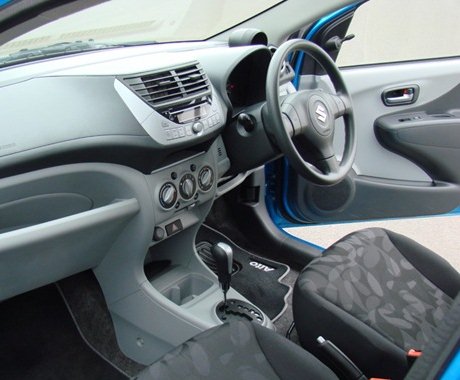 res. Cup holders also feature a new design. Though the I10 may have compact dimensions, it isn’t cramped by any standards and would fit reasonably sized elders with ease. The boot of this car now get a parcel tray while the rear seats feature 60:40 split seating arrangement.
Maruti A-Star automatic : The Maruti A-Star automatic in India gets the traditional dark expanse of grey in the cabin. The materials don’t feel as upmarket as in the Hyundai I10. What Maruti have done is kitted the A-Star automatic with lots of equipment like the cigarette lighter, door ajar warning, driver seat height adjust and also an internal boot release mechanism . Unfortunately the pop out tachometer has been omitted for the auto variant. The circular aircon vents however have chrome outlinings. The lower part of the dash in the meanwhile has sort of beige color plastics. Due to the certain tall boy design of this car, it is easier to get into the driver and front passenger seat however the same cannot be said about the rear. Maruti designers however forgot about the rear seat comfort and getting into the rear seat of the A-star is more of calisthenics. Boot space is also a bit compromised however expecting a big boot space out of a small hatchback is something which only a few would do. However the A-star’s boot can fit in weekend groceries.
The Hyundai I10 automatic wins this competition due to the fact that it has more space and comfort coupled with a better designed boot.
Handling and ride quality
Hyundai I10 automatic : Even though much of the car has been tinkered around with, the chassis or the underpinnings have been left untouched. The emphasis is more on the ride quality here. Hyundai engineers know that most of the people prefer a pliant ride quality than outright handling. Moreover, revisions to the engine has also resulted in a vibe free drive as also more of engine sound insulation. Handling precision has notably increased with the use of a much tighter steering wheel which unlike the earlier steering, feels a bit more tighter when the speeds rise. This is a boon for those looking for enthusiastic driving. Ride quality is bounce free as opposed to the Santro which had quite of a choppy ride quality. Fewer blind spots mean that this car is more driver friendly.
Maruti A-Star automatic : The Maruti A-Star automatic in India gets an electronic power steering which is quite similar to the one found in the Swift and that in itself isn’t a bad reference either. Unfortunately height adjust is not possible with this steering wheel setup. The A-Star has been tuned just the opposite of the I10. It is more on the stiffer side and hence provides for a firmer ride quality. Maruti has stressed on the fact that the A-Star is for those singles who want to make an impression in life. The 3 pot motor however is gruff at the startup but then eventually smoothens out. There is a fair bit of vibration creeping in through the pedals and steering wheel. Ride quality noticeably goes up with the increase in number of passengers. Maruti have done well to keep the NVH at bay however the K series engine does make its presence felt post triple digit speeds.
Once again the Hyundai I10 automatic for its ease of use and lower NVH characteristics.
Engine, performance and fuel efficiency
Hyundai I10 automatic : Along with the external body revision, the Hyundai I10 automatic in India gets an engine tweak as well. Like the Variable Timing and Valve Train found on its other cars, Hyundai have added VTVT to the existing 1.2 liter Kappa motor. Though this hasn’t resulted in a bump in power, it definitely has smoothened out the rough edges in this engine and makes it an effortless performer. This new engine makes 80 Ps of peak power and is aligned to a 4 speed auto gearbox. As with the sweet shifting manual gearbox, even this one shifts nicely. However one must learn to time the downshifts properly for overtaking other cars on the highway. However in the city which would be its primary bastion, this car is very much capable. The best part is the lack of NVH and vibrations. Hyundai have provided this car with some good brakes as also the necessary braking aids. Safety is tended to by twin airbags, collapsible steering column and seat belts with pretensioners. The ARAI certified fuel efficiency for the Hyundai I10 automatic stands at 16.67 kmpl.
Maruti A-Star automatic : The A-Star automatic in India was the harbinger of the K series technology for the Maruti Suzuki coalition. This small 1.0 liter petrol engine may not be packed with VTVT technology however it comes with a liveliness which is sadly missing in the I10’s motor. It has more than enough zip in the city to carry one around and at the same time highway jaunts would require more planning. The 998 cc engine produces 68 Ps of power and is also mated to a 4 speed auto transmission. The auto transmission works fine however calling for a downshift takes a bit of a slack. Not one to be coerced into hard driving then. The engine however loses its sprightly nature a bit on the highway and is more of an aggressive screamer. Now singles would prefer it and may be many would slap on after market exhaust bolts onto this auto variant however with a full complement of passengers onboard, you don’t want your car laboring around like a Tata Sumo without a turbocharger. Brakes in the A-Star wok fantastically and moreover, there is ABS and EBD to take care of the worse situations. The safety parameter is the same as that of the I10. However the Maruti delivers an ARAI certified average of 17.2 kmpl for its auto variant and this is a wee bit better than what the I10 provides for.
The Maruti A-Star automatic wins this round purely on the basis of a supreme smaller capacity engine but one which takes the fight right upto the bigger Kappa engine.
Verdict
From the above parameters, it is a no-brainer that the Hyundai I10 automatic in India is a far better car than the Maruti A-Star automatic. Not only is the I10 more spacious than the A-Star, it is also provides a better ride quality and better put interiors. Where the I10 loses out is on the fun to drive factor and the fuel efficiency. The A-Star is the perfect companion for singles and those looking for hassle free enjoyable motoring. The K series engine wouldn’t fail to excite every time it is called for duty. Plus the fuel efficiency that it deliver would have many smiling at the petrol pumps. It has got an extensive feature list as compared to the I10 as well. Pricing of both the cars is as different as their characters. While the I10 is for the more mature thinking person, the A-Star is for the more fun loving guy. The Hyundai I10 automatic price in India for the Asta variant is Rs. 5,63,129 while the Maruti A-Star automatic price in India is Rs 5,41,223. All these prices are ex-show room, Mumbai. Our winner of this contest is the Hyundai I10 automatic.



Leave a Reply